September 18, 2026 · 9 min read · Match Point KC
Every parent who walks into our building with a seven year old asks the same question in a different way. How good could she get? The honest answer is that nobody knows yet, and that the parents who get the most out of the next ten years are the ones who stop asking it.
Raising a competitive junior tennis player takes the right ball for their age, a coach who watches them every week, two or three sessions a week by the time they are ten, and match play that is a level or two below where they will eventually live. Push the schedule before the fundamentals and you get a twelve year old with a great serve who quits at fourteen.
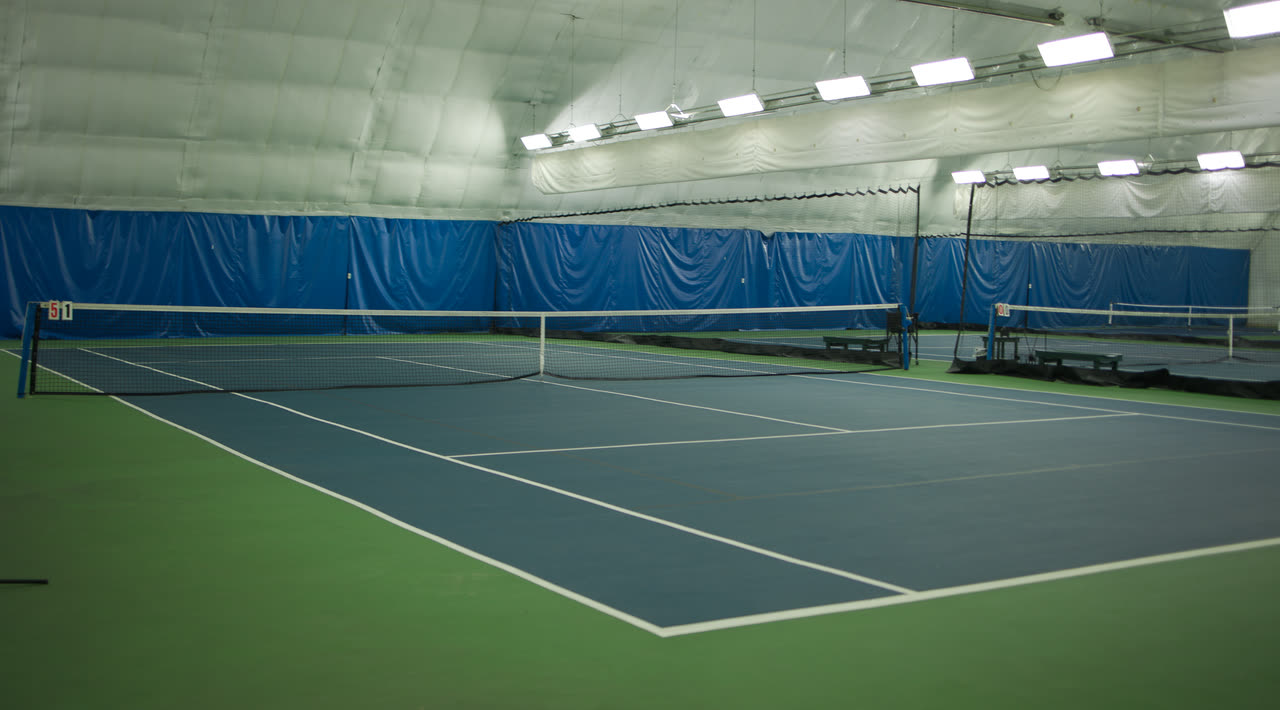
I have watched this play out on four indoor courts in Blue Springs for long enough to see the pattern. The kids who are still playing, and winning, at sixteen almost never had the biggest forehand at nine. They had the right ball in their hand at the right age, a coach who knew their name, and parents who understood what the sport asks of a family at each stage. That is the whole article, really. The rest is detail.
Start with the right ball, not the right academy
The single most common mistake is putting a small child on a full court with a full yellow ball. The court is 78 feet long. A six year old can barely see the far baseline, let alone get a ball there with any shape on it. So they swing hard, hit flat, and learn a stroke they will have to unlearn.
The USTA junior pathway exists to fix exactly that. Red ball for the youngest players on a short court. Orange ball, which is slower and lower bouncing, for players around seven to nine on a three quarter court. Green ball, close to full speed, for nine to eleven year olds on a full court. Yellow ball once the Net Generation levels are done, or from the month a player turns eleven. Each step lets a child hit a real stroke with real technique because the ball arrives at a height and speed their body can handle.
Our own levels follow the same shape, because there is no better one. Red Ball at four to six and again at seven to eight, Orange Ball at nine to eleven, Green Ball from twelve, then three yellow ball levels that depend on the player rather than the birthday. Pick your child's age below and see what the coaching is actually working on at that stage.
How old is your player?
Red Ball
Red dot balls, 36-foot court
Working on
Fundamental strokes and technique, plus an introduction to tactical awareness for both singles and doubles play. The smaller court and slower ball speed development up in a fun, age-appropriate environment.
What we expect
A love for the game and a desire to learn and improve. Good sportsmanship, character and respect for others, on and off the court.
Where it leads
Orange Ball.
Every level in full, with the ball colors, is on the junior programs page.
What competitive actually means at each age
Four to eight: fall in love with it
The only competitive goal at this age is that they want to come back next week. Red ball sessions are short, loud and full of games that happen to teach racquet skills. A child who leaves the court laughing has had a productive lesson. A child who leaves in tears because Dad was correcting their grip from behind the curtain has not, and will quietly find another sport by ten.
Nine to eleven: learn to compete
This is where the word competitive earns its place. Orange and green ball players start keeping score, playing team challenges and entering their first junior circuit events. They learn what it feels like to be down 3-1 and come back, and what it feels like not to. Both matter. This is also the age where multiple classes a week start to pay off, because the body is ready to groove a technique and the attention span is ready to hold one.
Twelve and up: build a game, not a shot
By yellow ball a coach can see whether a player has a game. Not a forehand, a game: patterns they go to under pressure, a serve they trust on break point, the fitness to play a third set. The players who move through our intermediate and advanced levels into high performance do it on those things, and they do it on a schedule that includes classes, private lessons and, crucially, practice on their own.
Hours per week, honestly
Parents want a number, so here is how I think about it rather than a rule. Under nine, one or two sessions a week is plenty and a second sport is a feature, not a distraction. Nine to eleven, two to three sessions with one of them being match play. Twelve and up, three or more if the player is asking for it, and the asking is the important part. A schedule the child did not choose is a schedule they will resent by fifteen.
The players who reach the top of our program train more than that. But every one of them got there by wanting more court time, not by being given it. Volume follows love. It does not create it.
Pick a coach, then get out of the way
You are not choosing a program. You are choosing a person your child will see more than most of their teachers. A few things worth asking before you commit.
- Are they cleared to coach kids? Every coach at Match Point KC is USTA Safe Play approved, which means annual SafeSport training and a criminal background screen. Ask any club the same question and expect a straight answer.
- Will they see my child every week? A rotating cast of coaches means nobody notices the grip creeping or the toss drifting. Progress in tennis is mostly noticing.
- Do they coach the level or the child? Watch a session. A good coach runs the same drill three different ways for three different kids.
- What happens on the days I am not there? The answer you want is that the coach talks to you about it. The answer you do not want is a shrug.
Then, and this is the hard part, let the coach coach. Cheer from the lounge. Ask your child what they worked on, not how many they won. The parents of our best juniors are, almost without exception, the quietest people in the viewing area.
Equipment, and why the cheap racquet is often the right one
A racquet that is too long or too heavy teaches a child to swing with their arm because they cannot get the head through with their body. Junior racquets come in lengths that step up with age, roughly from nineteen inches for the smallest players to twenty six inches just before a full size frame, and the right one is the one the child can swing fast without strain. Ask the coach before you buy. Our desk keeps loaner racquets for exactly this reason, so a seven year old can play a whole season on the correct size before anyone spends money on a frame they will outgrow by spring.
Shoes matter more than racquets. Tennis is a sideways sport and running shoes are built to go forward. A proper court shoe on an indoor hard court prevents most of the rolled ankles we see.
When to start tournaments
Later than most parents think, and lower than most parents want. The USTA structure makes this easy: red ball team challenges for the youngest players, orange ball events from seven, green ball events for nine to elevens, and the yellow ball junior circuit from the month a player turns eleven. A child who is winning comfortably at their ball color is ready to move up. A child who is losing every match is learning nothing except that they hate tournaments, and should be playing team challenges and in-house match play until the wins come. Our coaches will tell you which events to enter and, more usefully, which ones to skip.
One habit worth building early: the player, not the parent, packs the bag, checks the draw and knows their court time. By fourteen the ones who own their tennis are the ones still playing it.
Weather is a training variable, and Missouri has a lot of it
Here is the practical argument for indoor tennis that nobody makes because it sounds unromantic. A junior who trains outdoors in Kansas City loses weeks every winter to ice and wind and more to summer heat, and the sessions they lose are the winter ones, which is exactly when the players they will meet in Florida in March are grooving their games. Heated and cooled indoor hard courts mean a February session is the same as a July one. Consistency is not glamorous. It is most of what separates a good junior from a very good one.
The signs it is working, and the signs it is not
It is working when your child talks about a shot they are learning, asks to hit on the wall, is disappointed by a loss for about an hour and then fine, and wants to go back. It is not working when every session ends in a debrief in the car, when the schedule is yours and not theirs, or when the only thing anyone tracks is results.
If you are not sure which one you are looking at, come and watch a session or tell us about your player and a coach will call you back. It costs nothing to be pointed at the right level.
Questions people ask
- What age should a child start competitive tennis?
- Most children can start Red Ball lessons at four. Competition in the sense of keeping score and entering events usually starts around nine, at the orange and green ball stages, once the child can rally and wants to test it.
- How many hours a week should a junior tennis player train?
- Under nine, one or two sessions a week. Nine to eleven, two or three, including match play. From twelve, three or more if the player is asking for it. Volume should follow the child's enthusiasm, not lead it.
- What is the difference between red, orange, green and yellow ball tennis?
- They are progressively faster, higher bouncing balls used on progressively bigger courts, so a child can hit real strokes with real technique at every age. Red is for the youngest players on a short court, orange for roughly seven to nine, green for nine to eleven, and yellow is the standard ball from about eleven.
- Are the coaches at Match Point KC background checked?
- Yes. Every coach is USTA Safe Play approved, which includes annual SafeSport training and a criminal background screen. Call (816) 224-7999 if you want to talk to one before enrolling.
- Is indoor tennis better for junior development?
- For consistency, yes. Indoor courts remove the weeks that Kansas City ice, wind and heat take from outdoor players, and the winter sessions are the ones competitive juniors can least afford to lose.