Tennis etiquette for beginners in Blue Springs comes down to one short document. The USTA publishes the unwritten rules of tennis as The Code, its players' guide to fair play, and most of what a new player worries about, from close line calls to stray balls, is in it, whether you play on a city park court or an indoor one. This guide puts the parts that matter into plain English, then lets you test yourself on six situations nearly every beginner meets.
What is The Code in tennis, and who has to follow it?
The Code is the USTA's players' guide to fair play and the unwritten rules of tennis, and it applies to matches unless an official has taken over some of a player's duties. It is not part of the ITF Rules of Tennis. The USTA's Friend at Court 2026 handbook prints it as Part 2 and numbers its principles from 1 to 46.
Its preface explains why it exists: some things are covered by custom only, and its example is the benefit of the doubt on a line call, which you cannot find in the rulebook. The USTA calls following it the responsibility of all players, parents and coaches.
- numbered principles in The Code
- 46
- good: a ball that touches the line, even if it is 99 percent out
- 100%
You do not need to memorize any of it. Learn four ideas and the rest follows from courtesy.
How do line calls work in tennis etiquette?
You call every ball that lands on your side of the net, and if you are not sure, the ball is good. Without an official on court, the players make the decisions, and The Code is built around one habit: honesty that leans toward your opponent.
When you are not sure
Principle 6 says to give the opponent the benefit of any doubt. Principle 7 says a ball touching any part of a line is good and that you should not call a ball out unless you clearly see space between the ball and the line. The Code puts it in one line: "A ball 99% out is still 100% good." Principle 8 closes the escape hatch. You cannot ask for a replay because you did not see the ball.
When you clearly see it out
Say so, and say it right away. Principle 13 asks you to call your own shots out if you clearly see them out, with the first serve as the one exception, and principle 15 entitles your opponent to a prompt call they can hear or see. If you call a ball out and then become unsure, principle 12 says to reverse the call, and the point goes to your opponent without a replay.
Calling it promptly
Principle 17 asks for calls before your return has gone out of play or your opponent has had a chance to play it, which stops anyone getting two chances at one point.
More than a third of The Code is about making calls, which is why line calls are the first thing to learn.
Counted from Part 2 of the USTA's Friend at Court 2026, using the handbook's own headings.
What is the etiquette for warming up and serving?
Give your opponent five to ten minutes of easy shots hit straight to them, and play the serve at the server's pace. Warm-up is the first place a beginner can get it wrong without meaning to.
The warm-up
Principle 3 says a player should provide the opponent a warm-up of five to ten minutes, and that warm-up is not practice. Hit the ball directly to the other player, at a pace they can handle. A player who declines to warm up the opponent gives up the right to a warm-up, and the opponent may warm up with someone else. Principle 4 adds that warm-up serves are taken before the first serve of the match, and that a returner should send them back at a moderate pace.
The serve and the score
Principle 29 says a receiver who is not ready should make no effort to return a serve, but one who tries is presumed ready. Principle 31 makes the server responsible for announcing the score before each point. If you and your opponent disagree about it, principle 32 says to count every point and game you agree on and replay only the disputed ones.
One surprise for beginners: under principle 2, points played in good faith stand. If you discover mid-game that you have been serving from the wrong side, there is no replay. You correct it once the point is over.
What do you do about stray balls and noise?
Stop the point if a ball rolls onto your court, and wait until the point ends before you send a ball back to another court.
A ball rolls onto your court
Principle 18 says any player on the court who is affected may call a let as soon as they become aware of the ball, and loses the right if they delay unreasonably. Principle 17 shuts the loophole: if you see the ball rolling in, play on and miss, you cannot claim a let afterward, because you took a chance to win the point and are not entitled to a second one.
A ball goes next door
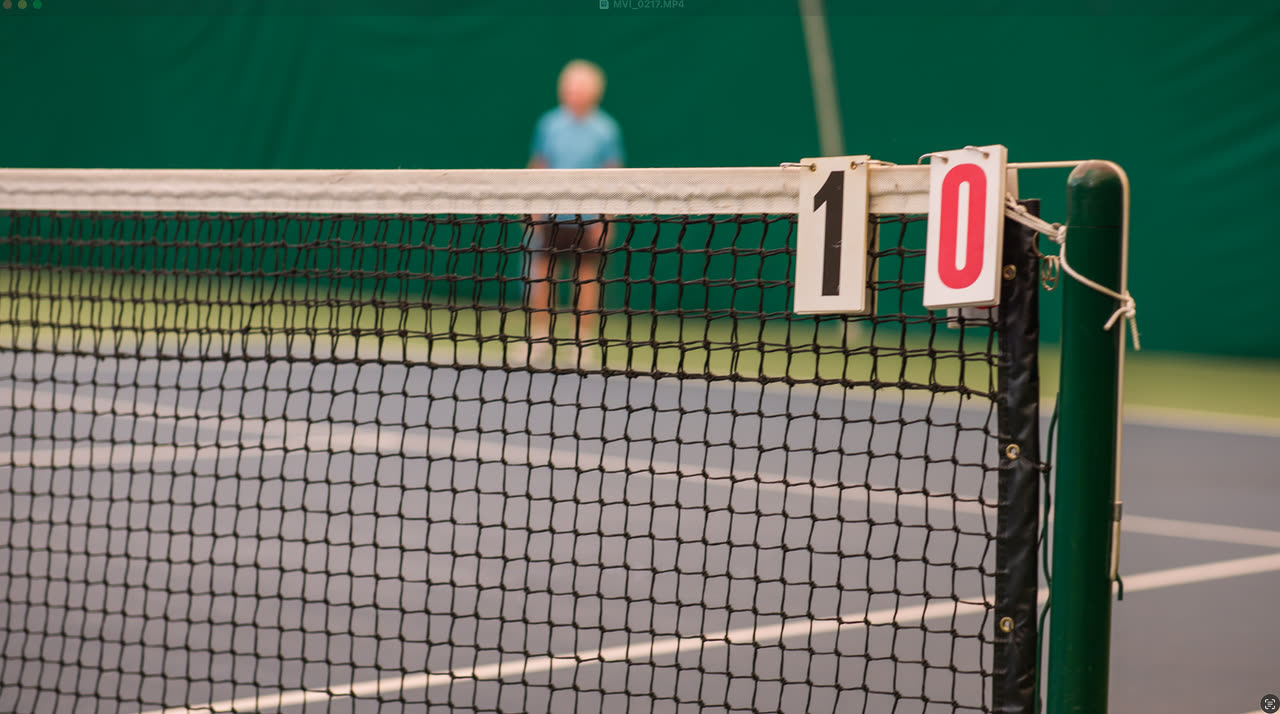
Each player is responsible for removing stray balls from their own end of the court, according to principle 42. You should not go behind an adjacent court, or ask a player there to return a ball, while a point is in play. When a ball comes to you from another court, wait until the point is over, then return it directly to one of the players, preferably the server.
Talking and grunting
Principle 34 says singles players should not talk during points, and doubles partners may talk only while the ball is heading toward them. Principle 37 asks players to avoid grunting and other loud noises, which can bother the next court as well as the opponent.
Six situations: what would you do?
The six below come straight from The Code. Answer as you would on court, and the handbook's answer appears under each one.
What would you do?
Six situations. Pick an answer and you will see what The Code says before you move on.
Situation 1 of 6
Rather learn it with a coach?
A first lesson is mostly about getting the ball back over the net. The etiquette comes along for free.
What is different about etiquette in doubles?
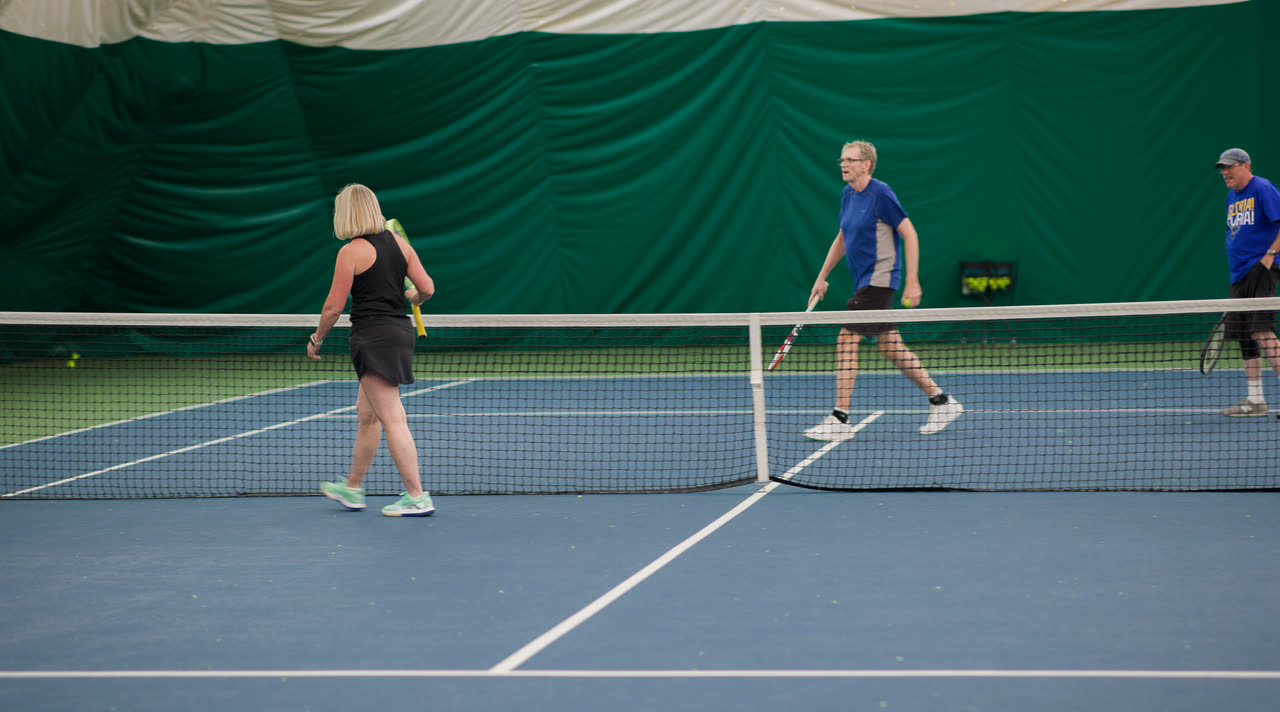
Either partner can make a call, and if partners disagree, the opponents get the call that favors them. Principle 9 notes that the call of a player looking down a line is more likely to be accurate than one from a player looking across it.
Principle 14 covers the awkward case. If your partner calls a ball out and you saw it good, it is good, because giving opponents the benefit of the doubt matters more than sparing a partner's feelings. The tactful route is to tell your partner quietly and let them concede the point. On serves, the receiver's partner calls the service line and the receiver calls the sideline and center line (principle 25).
What small things do beginners get wrong?
Three easy ones, and every one is in the handbook.
- Towels. Put them on the ground outside the net post or at the back fence, never on the net (principle 46).
- Phones. A ringing cell phone is a deliberate hindrance, and your opponent may stop and claim the point (principle 36). Silence it before you start.
- Catching a ball. If you catch a ball in play before it bounces, you lose the point, wherever you are standing (principle 43).
Myth
A ball that is mostly out can be called out.
Fact
If any part of the ball touches the line, it is good. You call a ball out only when you clearly see space between it and the line.
Myth
If you did not see it, ask for a replay.
Fact
A ball you cannot call out with certainty is good, and you may not claim a let because you did not see it.
Myth
The warm-up is time to practice your own shots.
Fact
Warm-up is not practice. Each player hits shots directly to the opponent, for five to ten minutes.
Does tennis etiquette matter in a friendly hit?
Less than in a match, and mostly as kindness. Nobody is enforcing The Code on a friendly hit, and principle 1 says it in three words: courtesy is expected. Call close balls in your partner's favor, keep your balls off other courts and wait for a point to end before you walk across.
The details start to matter in a club match or a league night, where players make their own calls, and more in tournaments. Junior events in the Kansas City area run under The Code too, as we explain in how junior tennis tournaments work in Kansas City. If you also play pickleball, the same call-it-in habit shows up in our guide to pickleball open play in Blue Springs.
How does tennis etiquette work on Blue Springs courts?
The same way everywhere, but sharing makes three principles matter most: calling balls fairly, stopping for stray balls and waiting for a point to end. The City of Blue Springs lists 20 tennis courts among its 14 developed public parks, including six at Wilbur Young Park, four of them lighted, and its Parks and Recreation Department, at 816-228-0137, can say which park suits you. Wherever courts sit near each other, balls roll between them, and principles 17, 18 and 42 say what to do. With no official on court, principles 6 to 8 are your own job.
Indoor tennis courts in Blue Springs
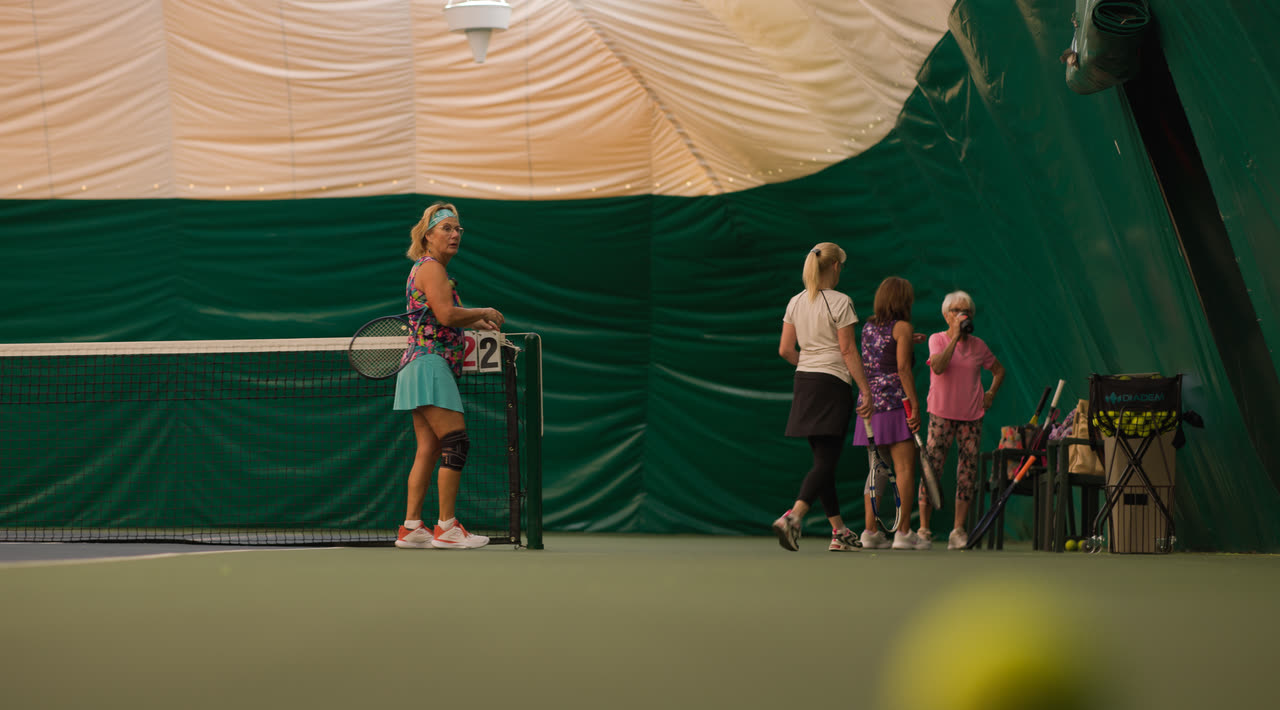
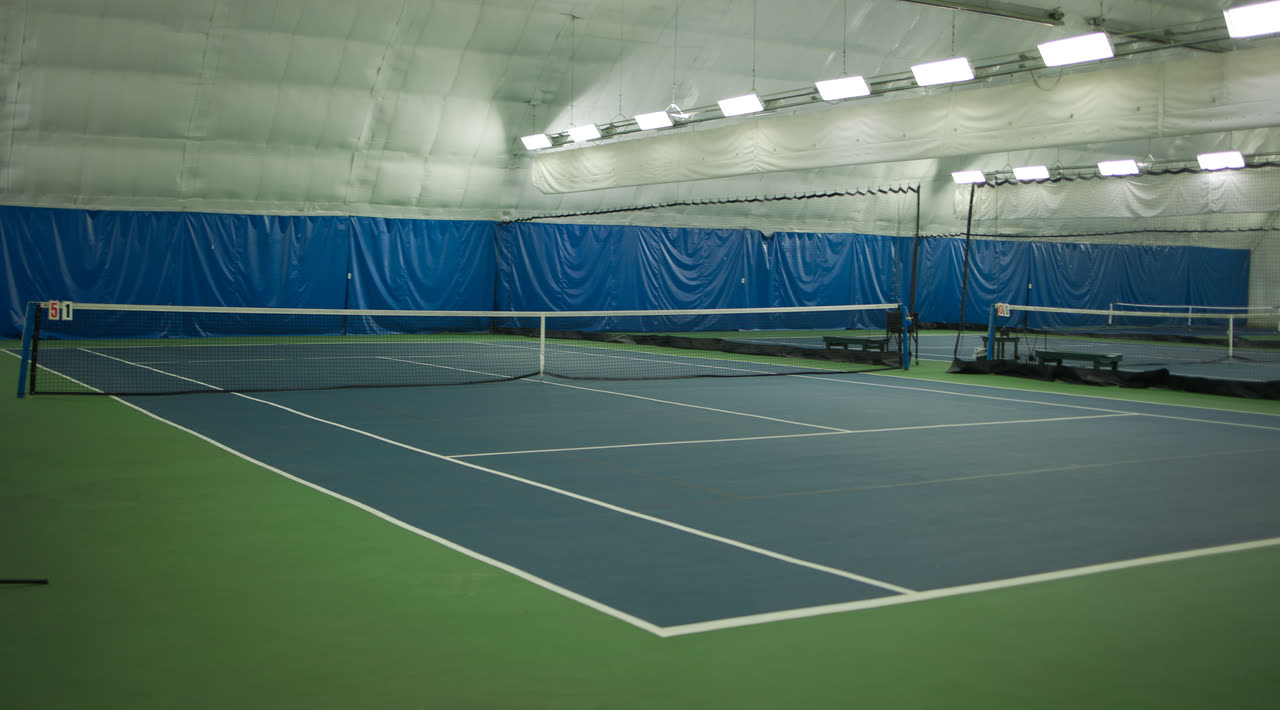
Our indoor tennis courts in Blue Springs are four heated and cooled courts at 3109 NW Vesper Street, minutes from Kansas City and Lee's Summit, and the same principles apply when a ball rolls from one to the next. Our tennis lessons in Blue Springs welcome beginners, and the lessons page says the first lesson is mostly about getting the ball back over the net. A coach is right there when a question comes up.
Your first visit and your first match
Wear comfortable athletic clothes and trainers with a flat, non-marking sole. We have racquets you can borrow, and everyone signs a liability waiver at the front desk before their first time on court. For a regular match, our adult tennis leagues in Blue Springs and weekly adult activities are the place to start, and the NTRP self-check and Kansas City league guide helps you pick a level. New to the game altogether? Read how long it takes to learn tennis as an adult, or book a court with a friend any time.
Key takeaways
The Code is the guide. The USTA numbers its unwritten rules from 1 to 46, and you only need a handful.
Doubt goes to your opponent. A ball touching any part of a line is good, and you do not call it out unless you clearly see space.
Warm up, then play. Five to ten minutes of easy shots hit straight to your opponent, and wait for the point to end before returning a stray ball.
In a friendly hit, be kind. Nobody enforces The Code there. Courtesy is the part that matters.
Questions people ask
What are the unwritten rules of tennis?
They are collected in The Code, the USTA's players' guide to fair play, which Friend at Court 2026 numbers from 1 to 46. The big ones: give your opponent the benefit of any doubt on line calls, count a ball that touches any part of a line as good, give a five to ten minute warm-up, and wait for the point to end before returning a stray ball.
Where can beginners play tennis in Blue Springs, MO?
The City of Blue Springs lists 20 tennis courts in its public parks, including six at Wilbur Young Park. For indoor courts and lessons, Match Point KC has four heated and cooled indoor tennis courts on NW Vesper Street, and beginners are welcome. Call (816) 224-7999 or see the lessons page.
How long should a tennis warm-up be?
The Code says a player should give the opponent a warm-up of five to ten minutes, hitting shots directly to them. Warm-up is not practice, and a player who declines to warm up the opponent gives up the right to a warm-up.
What if I am not sure whether a ball was in?
Call it good. The Code says to give your opponent the benefit of any doubt, a ball touching any part of a line is good, and you should not call a ball out unless you clearly see space between it and the line. You also cannot ask for a replay because you did not see the ball.
What should I do if a ball rolls onto my court during a point?
Call a let as soon as you see it. The Code says any player on the court who is affected may do this, and that you lose the right if you delay unreasonably. If you play the ball and miss, you cannot claim a let afterward.
What should I wear and bring to my first visit to Match Point KC?
Wear comfortable athletic clothes and trainers with a flat, non-marking sole. We have racquets you can borrow, and everyone signs a liability waiver at the front desk before their first time on court. Call (816) 224-7999 if you have questions.