The USTA counts 4.9 million Americans who picked up a racquet for the first time in 2025, out of a record 27.3 million players. If you are thinking about joining them, you are probably asking how long it takes to learn tennis as an adult. This guide answers it honestly, shows what moves a beginner along, and explains where to start in Kansas City.
- million Americans played tennis in 2025
- 27.3
- million picked up a racquet for the first time
- 4.9
- million played ten or more times
- 14.5
The milestones that matter
The USTA's NTRP rating gives adult beginners real milestones, and the first rung that counts is a short, slow rally. The timeline below uses the USTA's own words from its NTRP stroke characteristics chart. Read it as a map, not a schedule.
The beginner path, in the USTA's words
Day one
This player is just starting to play tennis.
Ball in play
This player has limited experience and is still working primarily on getting the ball into play.
Basic positions
Familiar with basic positions for singles and doubles play; frequently out of position.
The first rally
Can sustain a short rally of slow pace; modest consistency; weak court coverage.
Steady hitting
Fairly consistent on medium-paced shots.
Placing the ball
Improved consistency on moderate shots with directional control; improved court coverage.
Notice what the first rungs are not. Nobody on that ladder is hitting winners. At 1.5 the job is getting the ball into play, and at 2.5 it is keeping a slow rally going with a partner. That is the real beginner goal, and it is a smaller and more reachable target than most adults picture.
So how long does it take to learn tennis as an adult?
The USTA does not publish a timeline, and we could not find a study that does, so nobody can honestly promise you a date. What you can count on is the order: ball in play, then a short rally, then steady medium-paced hitting, then direction. Each stage rests on the one before it, which is why skipping ahead rarely works.
Be wary of anyone who quotes exact months. A number like that comes from one coach's experience, not from measurement, and your pace depends on things a number cannot see: how often you play, how you practice and what you are trying to learn. The rest of this guide is about the things you can change.
What if everyone else is better?
You will not be the only beginner. The USTA counted 4.9 million first-time players in 2025, and our lessons page puts it plainly: beginners are the reason half of our sessions exist, nobody is keeping score of your technique, and the first lesson is mostly about getting the ball back over the net.
What speeds it up
Three things matter most: how often you play, whether someone feeds you balls you can actually hit, and gear that fits. Nobody has measured these for adult tennis that we could find, so read them as coaching judgment rather than research.
How often you play
Regular contact with the ball beats occasional long sessions. Once a week is a real start and twice a week is faster, and a gap of a month asks you to relearn what you did last time. The easiest way to keep the rhythm is a standing slot, a lesson or a weekly group, rather than relying on a free evening turning up.
A coach feeding balls, or trial and error
You can teach yourself, and plenty of people do. One USTA-published beginner guide treats lessons as the step after you can hit the ball over the net consistently. Coaches, ours included, tend to start people with a lesson, because a coach feeds balls at a height you can hit and corrects a bad habit before it sets. Our tennis page says a coach will have you rallying in your first session, and our lessons page describes the first lesson as mostly about getting the ball back over the net.
Gear that fits
You need less than you think. The same USTA guide says that at the most basic you need a racquet and balls, that trial and error is the best way to find a racquet, and that an oversized grip tires your forearms. It also advises sneakers with good support, and avoiding black-soled shoes that can mark the court. At our club you can borrow a racquet, and we ask first-timers to wear trainers with a flat, non-marking sole.
Your first lesson and first month
Your first lesson should be about getting the ball back over the net, and the first month should be about one thing: your first rally. Here is how to set it up.
- Wear comfortable athletic clothes and trainers with a flat, non-marking sole.
- Borrow a racquet if you do not own one. You will know what you like after a few sessions, and not before.
- Sign the waiver. At our club everyone signs a liability waiver before their first time on court, and it takes a minute at the front desk.
- Ask the coach where you are on the ladder. The timeline above gives you shared words for it.
- Book the second session before you leave. A standing slot is what turns a good first lesson into a habit.
- Measure the month by the rally, not by the shot. A short rally with a partner is the milestone.
Ready for a first lesson?
Private and group lessons for adults, indoors, with beginners very much included.
Group lessons, private lessons or hitting with a friend?
Group lessons suit people who want company and repetition, private lessons suit people who want fast feedback, and hitting with a friend is a perfectly good start if you already have a partner. Four questions will tell you which, including the answer where we tell you a lesson is not needed yet.
Group, private, or just hit?
Answer all four and we will point you somewhere sensible.
How our lessons are set up
We run private tennis lessons, where it is one coach and one player on one thing at a time, and group lessons, which are coached sessions built around drills, live points and a lot of repetition. You can come alone or bring three. There is also beginner instruction for people who have never held a racquet, and every coach is USTA Safe Play approved. If you want to know what to look for in any coach, our guide to what makes a good tennis coach has a checklist.
Starting tennis as an adult in Kansas City
You have three starting points in Kansas City: a club lesson, a coach listed by the USTA, and a public court with a friend. All three are legitimate, and the right one depends on the quiz above.
A club lesson
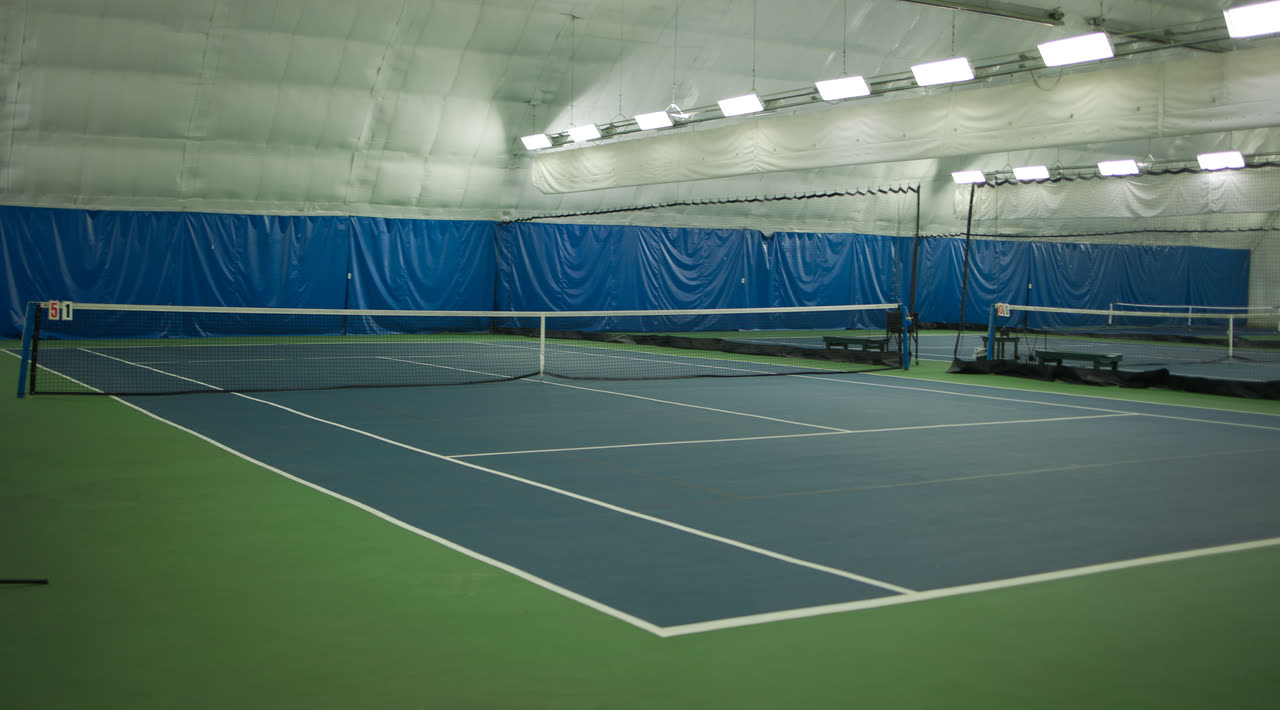
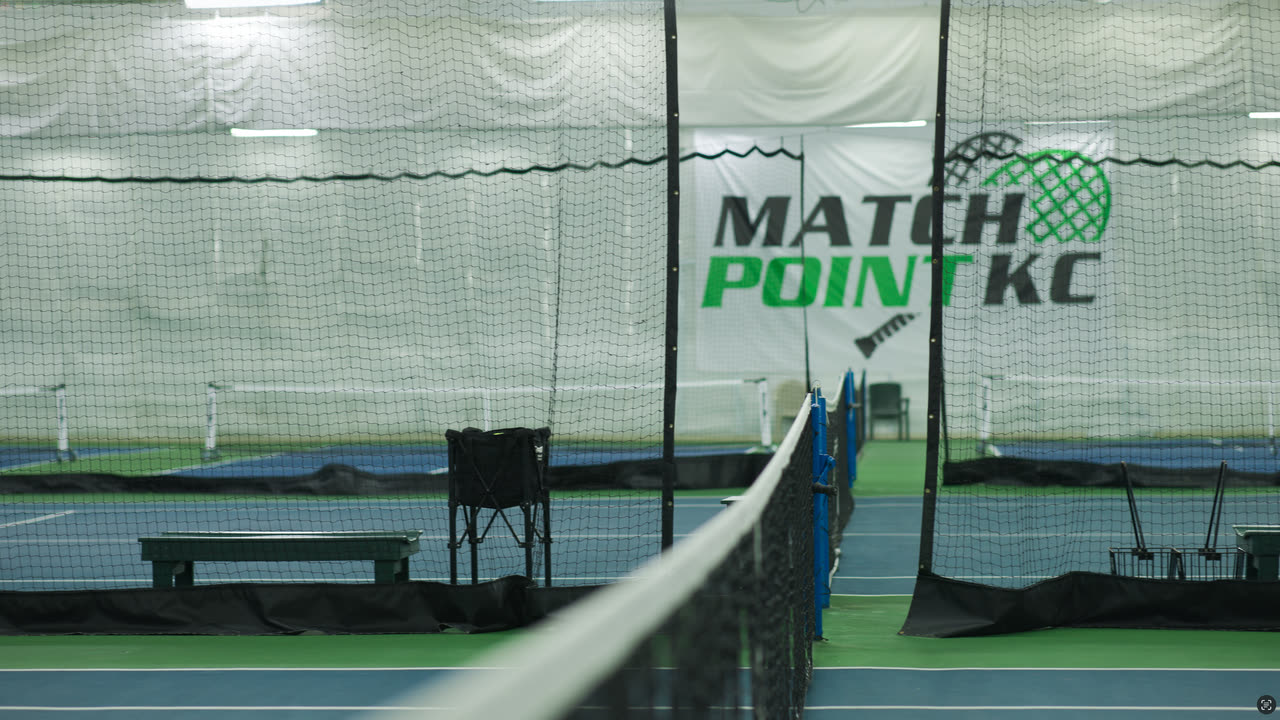
Match Point KC is in Blue Springs, with 4 indoor hard courts that are heated and cooled, so your lesson happens whatever the sky is doing. Our lessons page lists private, group and beginner options, and the get started form takes about a minute. Winter is where indoor courts earn their keep, and we explain the weather in our guide to indoor tennis in Kansas City.
A coach listed by the USTA
The USTA's Find a Coach tool lists Safe Play approved coaches and play opportunities, which is a good way to compare options before you commit anywhere, ours included.
A public court with a friend
If you already have a partner, a public court costs nothing and is a fine place to start in the warmer months. The USTA has a facility search, and we list the parks in our area in where to play tennis in Blue Springs.
After the first rally: leagues and match play
Once you can sustain a rally, you can start playing people, and the USTA's levels tell you where. Its League generally begins at 2.5, which is a women-only level, and 3.0 for everyone else, so a few months of regular hitting is the bridge. Our weekly adult activities are a lower commitment than a league season, with the same people and the same energy. When you are ready to find your level, our NTRP self-check and Kansas City league guide will do it in a few minutes.
What changes after 2.5: doubles and the net
The USTA's chart shows where the game goes next. At 3.0 the most common doubles formation is still one player up and one back, and a player approaches the net when play dictates but is weak in execution. At 3.5 a player is starting to look for the opportunity to come to the net and is developing teamwork in doubles. In other words, the next jump after a steady rally is as much about positions, partners and decisions as it is about harder strokes, and that is where match play helps.
Key takeaways
There is no official timeline. There are official milestones: a short, slow rally is a 2.5 and steady medium-paced hitting is a 3.0.
Frequency beats intensity. A standing weekly slot does more than the occasional long session.
You need less gear than you think. A racquet, balls and supportive shoes. Borrow a racquet until you know what you like.
Lessons are faster, not mandatory. A coach feeds you balls you can hit. A friend and a court is also a fine start.
Questions before you start? Ask us or call (816) 224-7999. You can also read the USTA's participation release behind the numbers at the top.
Questions people ask
How long does it take to learn tennis as an adult?
There is no official timeline. The USTA's ratings give milestones: a short, slow rally is a 2.5 and steady medium-paced hitting is a 3.0. How fast you get there depends mostly on how often you play and whether a coach is feeding you balls.
Is it too late to start tennis as an adult?
No. The USTA reported 4.9 million people picking up a racquet for the first time in 2025, and tennis is a sport you can keep playing for decades.
Do I need lessons to start tennis?
No. At the most basic you need a racquet and balls, as the USTA puts it. Lessons are the faster route because a coach feeds you balls you can hit, but a friend and a court is a fine start.
What should I wear to my first tennis lesson?
Comfortable athletic clothes and trainers with a flat, non-marking sole. The USTA suggests sneakers with good support and says to avoid black-soled shoes that can mark the court.
Are group or private tennis lessons better for adults?
Group lessons are coached sessions built around drills, live points and repetition, and you can come alone. Private lessons are one coach and one player, with the fastest feedback. Start with whichever feels less intimidating.
Where can adults take tennis lessons in Kansas City?
Match Point KC in Blue Springs offers private and group lessons and beginner instruction on indoor courts, and the USTA's Find a Coach tool lists Safe Play approved coaches and play opportunities.